

By mid-October, the initial magic of the new school year wears off—I always say the honeymoon period is over, and I begin to see more and more of who my students really are. The compliance established in late August when students were nervous begins to dissipate, and educators like me often find themselves trapped in a tiring cycle of boundary and rules enforcement that takes up precious classroom minutes. When students struggle or push back, it is incredibly easy to fall into one of two default teaching personas: the Enforcer, who demands respect through rigid compliance and sometimes punitive grading, or the Protector, who lowers the academic bar out of a misguided sense of compassion. In my experience, neither approach works.
According to Stanford psychologist David Yeager, author of “10 to 25: The Science of Motivating Young People,” adolescents are neurobiologically driven by a powerful craving for status, respect, and social purpose. When we treat them with punitive control or low expectations, they don’t just disengage—they actively rebel to protect their pride and their social status. Based on this idea, I think we might transition into Synergistic Mentors instead (a term from the book). This mindset, paired with the structural frameworks found in Joe Feldman’s “Grading for Equity,” allows educators to maintain uncompromisingly high academic standards while building the transparent, predictable systems that give students (and in my case, middle schoolers) the physical and psychological safety they need to take academic risks and make academic gains. We have all heard the mantra “Build relationships!” but this felt to me a little different than that, and possibly a place I could continue to improve my practice and build on changes I have already made.
Classroom Systems That Reduce Cognitive Load in Middle School
True equity in a middle school classroom like mine starts before a single lesson is taught because it is engineered directly into the physical space. When a classroom lacks predictable structures, struggling students spend valuable cognitive energy trying to navigate the environment rather than engaging with the content. To combat this, my 8th-grade ELA room uses hyper-standardized micro-systems to reduce cognitive load for both the teacher and the students. These include:
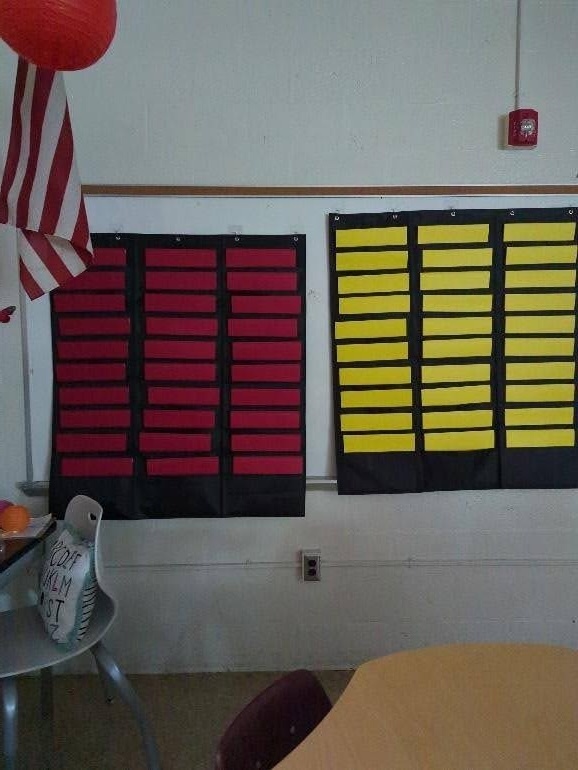
The Color-Coded Room: Every core class period is assigned a distinct color and an icon/emoji. Everything tied to that period—hanging wall folders, important handouts that remain in the room, and binder clips to name a few things—matches that specific color or icon/emoji. Students never have to guess where their work belongs or scramble to find materials. It is visual and recognizable. Student names are written in black sharpie on the part that sticks out—so you can slide papers in and hand papers out easily. I also slip in this pink sign when a student is absent so I can cue both of us into action.
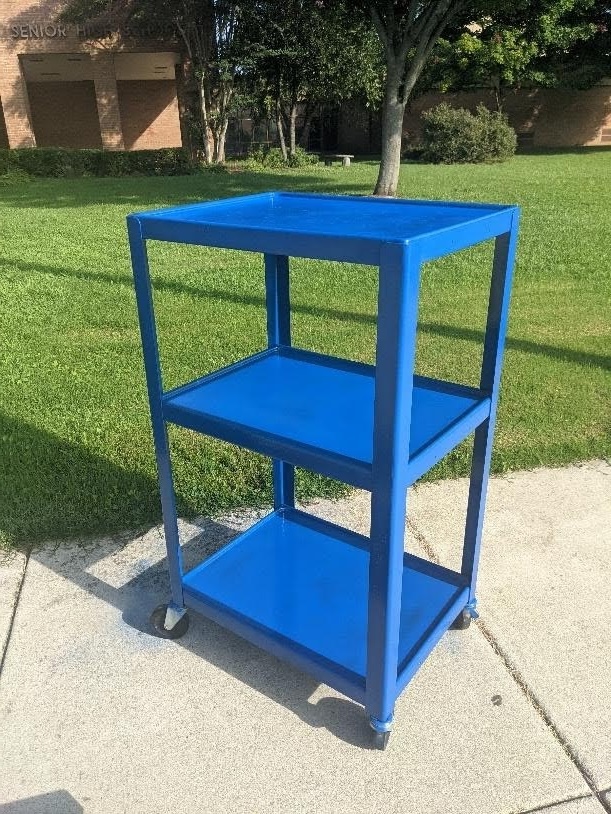
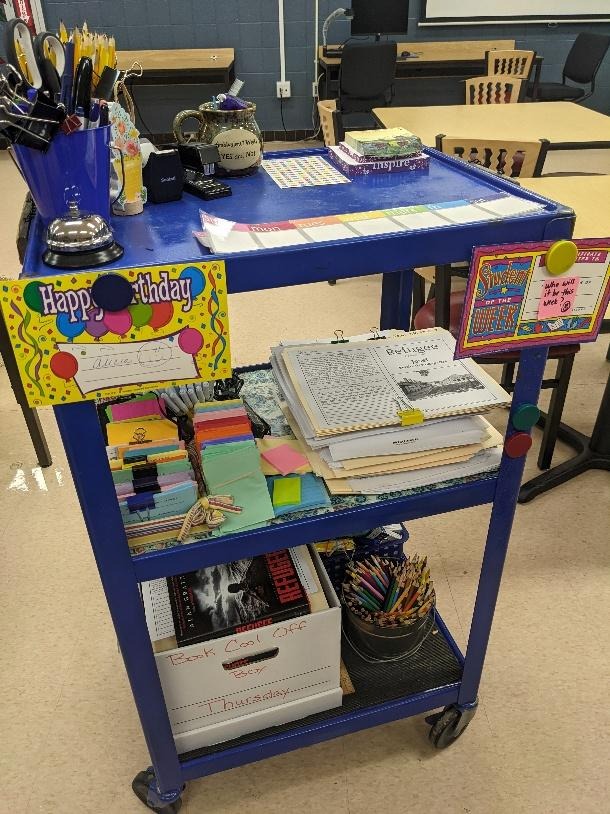
The Central Supply Hub: Placed directly in the center of the room is a small, fully stocked student supply cart. If a student needs a pencil, a highlighter, or another graphic organizer, they don’t need to ask permission or draw public attention to themselves. They simply stand up and get it. By giving adolescents structural autonomy over their physical environment, we eliminate low-level friction and honor their status as developing young adults.
A Standards-Based Data Wall That Motivates Without Shaming
Adolescents care deeply about peer perception. Traditional data tracking can sometimes weaponize this drive, publicly shaming struggling learners, causing them to emotionally check out. This year I began to leverage data for status by tracking class-wide mastery percentages for core 8th-grade ELA standards on a public Data Wall outside the classroom. I also track “Highest Scores EVER” for students in the building, noting that they have their highest quarterly score, for example, since they arrived at my middle school. It doesn’t matter it’s a 68%–what matters is that it is higher than anything they have done before. I celebrate that!
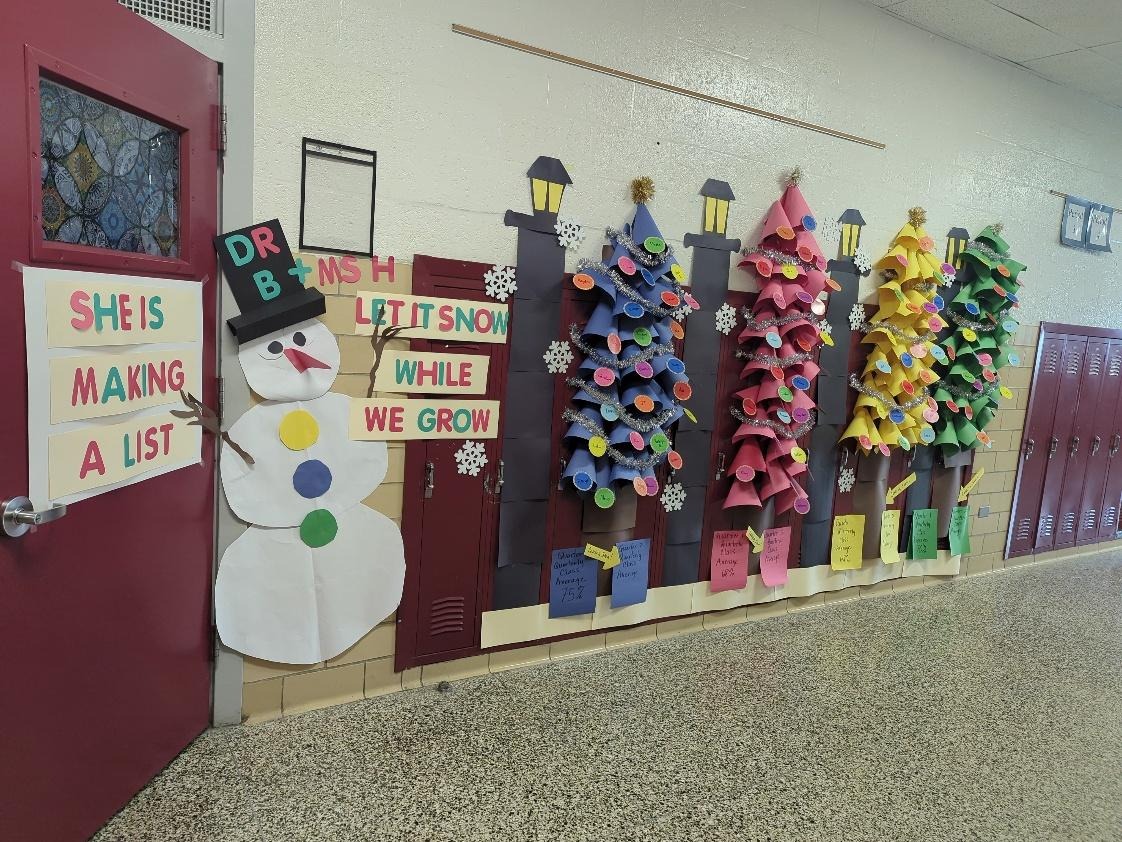
By shifting the metric from individual grades to collective standard mastery, the data wall fuels friendly, cross-class competition—and since winners get a party with ice cream and cake I make myself, most buy into trying harder toward a shared purpose, encouraging their peers to give maximum effort because their collective social status is on the line.
Don’t Grade the Practice Phase
The true test of a high-expectations educator occurs when an 8th-grade student walks into the room reading or writing at a 5th-grade level. The Synergistic Mindset demands that we maintain the rigor of the 8th-grade standard; however, Feldman’s equitable grading principles demand that we stop penalizing the student for the messy, non-linear nature of the learning process.
Consider how this played out during our close-reading unit on Edgar Allan Poe’s The Tell-Tale Heart. Rather than relying on passive audio warm-ups that disengage the brain, we launch directly into a “Word of the Day” vocabulary warm-up targeting the word followed by a rigorous daily writing prompt that talks about what it means to be untrustworthy and /or unreliable. When a student reading at a 5th-grade level encounters the complex syntax of Poe’s text, look at the difference in teacher execution when we frame it with equity in mind.
|
The Interaction |
The Teacher Response |
The Adolescent Impact |
|
|
My old mindset |
I give back an analytical response covered with my feedback with suggestions to improve, noting missing homework preparation and docking 10% for a late submission. (me, old mentality) |
I say “Hey, you didn’t turn in the vocabulary pre-work on Tuesday, so you lost points there. If you don’t copy down the text summaries, your grade will drop another letter. Let’s just focus on matching simple definitions so you can get a passing grade.” (me, trying to be helpful and boost grades) |
The students can experience this as an attack on their intelligence. It infers that compliance matters more than thinking and sends the message that fixing the grade is more important than learning. They might conclude they cannot handle complex literature, and emotionally quit. |
|
My new mindset |
The teacher utilizes a self-inking feedback stamp on the graphic organizer and uses a rubric with parts marked appropriately for the student to be able to utilize. The focus remains strictly on tracking standard mastery (RL.8.1 & RL.8.3), treating the 5th-grade sentence scaffolds and text-dependent frames as low-stakes, non-graded practice. |
“I am giving you this feedback because I have very high expectations for your analysis of Poe’s text that shows the narrator being unreliable, and I know you can reach them. We are using these structured sentence frames right now to anchor your evidence. This practice won’t impact your gradebook score—it is your toolkit to master the standard before the final assessment.” |
The student’s neurobiological drive for respect is validated. Because the penalty for taking an academic risk is removed, they view the teacher as a mentor rather than an enforcer, building the resilience required to close the achievement gap. |
Separating Behavior from Grades
The contrast between these two mindsets reveals a profound truth about middle school teaching: true classroom care is structural, not soft. When we operate in our old mindset—even when we are genuinely trying to be helpful and protect a student’s grade—we inadvertently signal that compliance matters more than thinking, and in order to rise academically, rigor must be maintained and feedback has to be acted upon. We have to be very careful that we don’t turn the gradebook into a record of behavior rather than a map of learning and mastery. For an 8th grader, grades can feel like an indictment of their intelligence, prompting them to emotionally quit before they can even begin to close the gap.
By shifting to my new mindset, I have been working on ensuring I completely separate behavioral compliance from academic standard mastery. I have tried to stop grading the messy, non-linear practice phase of learning, and I have really embraced using tools like self-inking stamps and clear, analytical rubrics to honor the adolescent drive for respect and status. I think when we give our students the safety to fail safely during practice, we give them the psychological security to meet our highest professional expectations. We move out of the role of an enforcer tracking missing pre-work and policing compliance, and we step into the role of a synergistic mentor, guiding students to mastery. We show students the highest form of respect possible: proving to them that we believe they can achieve excellence and engineering the micro-systems in the classroom they need to make it happen.
For School Leaders: When Grading Change Stalls Across a Building
Everything I’ve described happened in one classroom, with one teacher who had the time and support to rethink her practice. I know that’s not how it goes in most buildings. Principals and district leaders tell me they believe in better grading practices, and their teachers nod along in PD. Then the gradebooks look the same in the spring. Some teachers are all in, some are quietly resisting, and every problem a leader solves seems to uncover another one.
What helped me was realizing that more effort wasn’t the answer. I had to change the systems around the work. The same is true for grading reform at scale. Pushback from teachers isn’t always a buy-in problem. Often it’s information about what’s getting in the way.
By: Dr. Nanci Brillant, Crescendo Education Group Coach
Dr. Nanci Brillant has provided Professional Learning (PL) at the school, district, and state levels in Florida and Maryland, covering topics such as Creative Classrooms, Student Engagement, Teacher Leadership, Arts Integration, Grading for Equity, and PL for new teachers entering the workforce. As an NBCT, she is continually honing her practice and sharing ideas with others. Recognized as a Florida high-impact teacher (top 1%) and as a finalist for TOY for the state of Florida, and having received Official Citations from the Maryland General Assembly for excellence in education, she is on a one-woman mission to turn apathetic students into creative and critical thinkers, one classroom at a time. She has been teaching since 2003 and has been with CEG since 2021.